Confidential (healthcare) · Healthcare
Full-stack AI platform for adaptive rehabilitation.
Category
AI
Year
2024
Capabilities
AI, Full-Stack
Industry
Healthcare
The problem
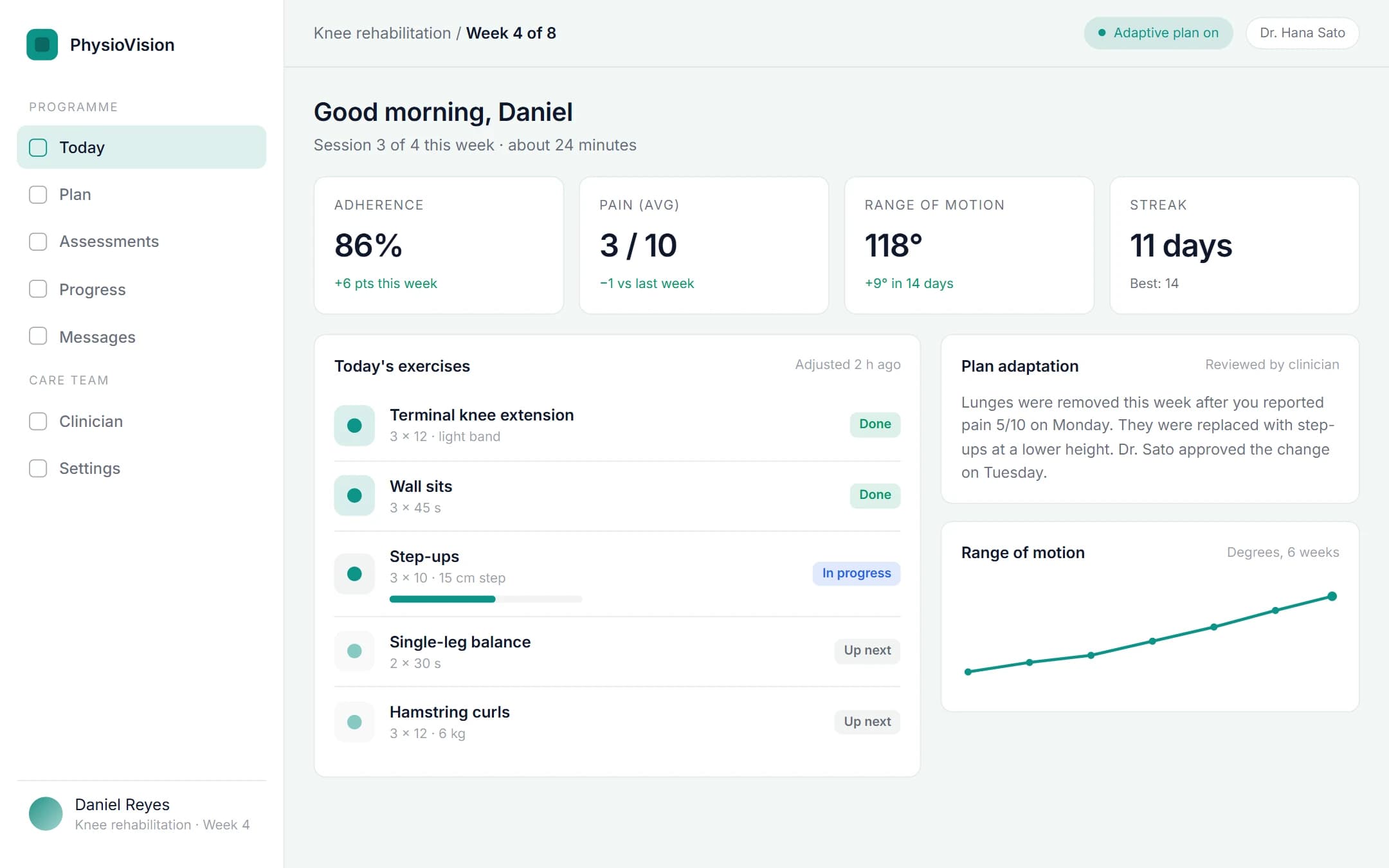
The rehabilitation journey was fragmented across manual intake, movement assessment, generic exercise plans and infrequent follow-up. Patients had little guidance between supervised sessions, and plans did not respond quickly to performance.
Our approach
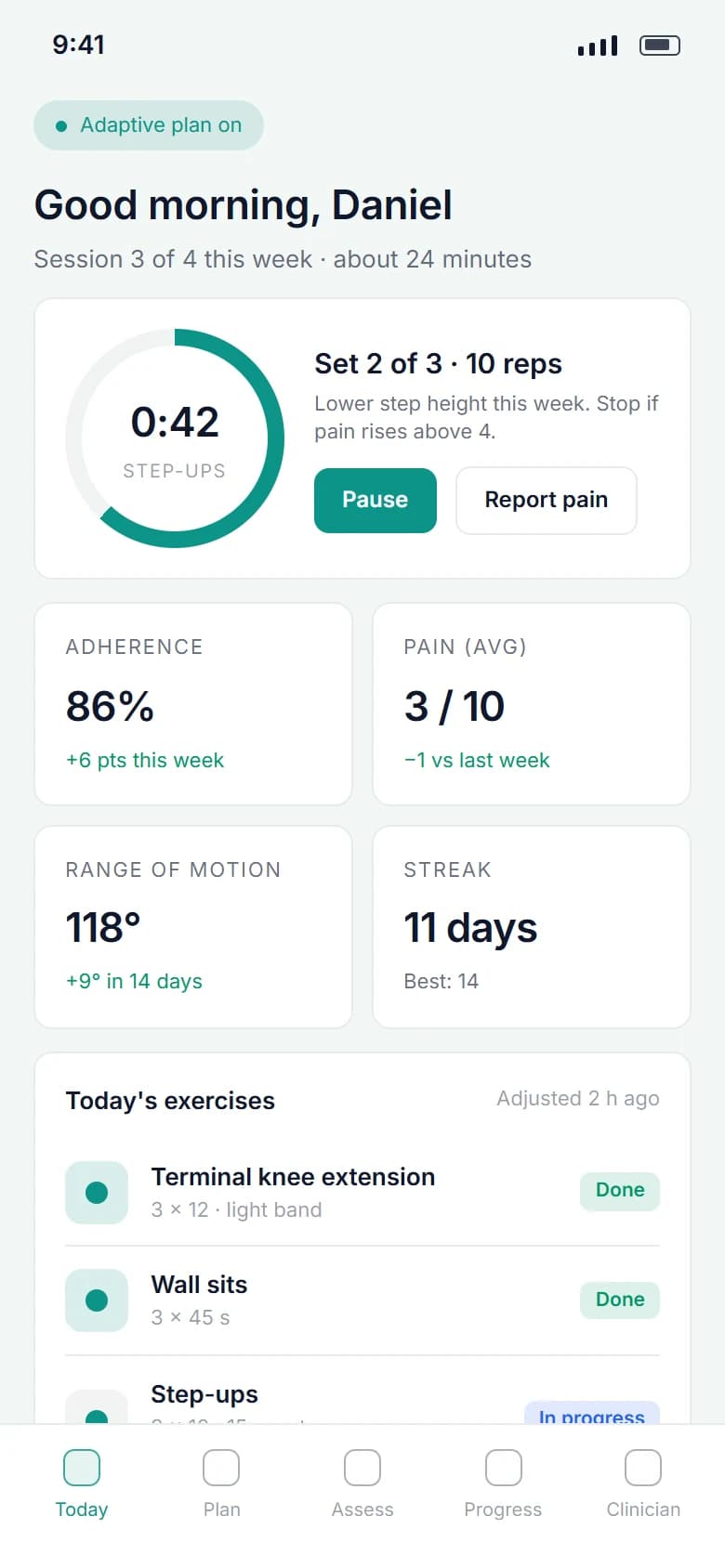
We built the journey around an intake agent, guided movement assessment and automatic exercise plan generation. Daily logs drive plan progression or regression, while uploaded exercise videos receive AI feedback and injury articles inform future plans.
Inside the product
More than one screen.
3 more screens from AI Physiotherapy Assistant, captured at device size.
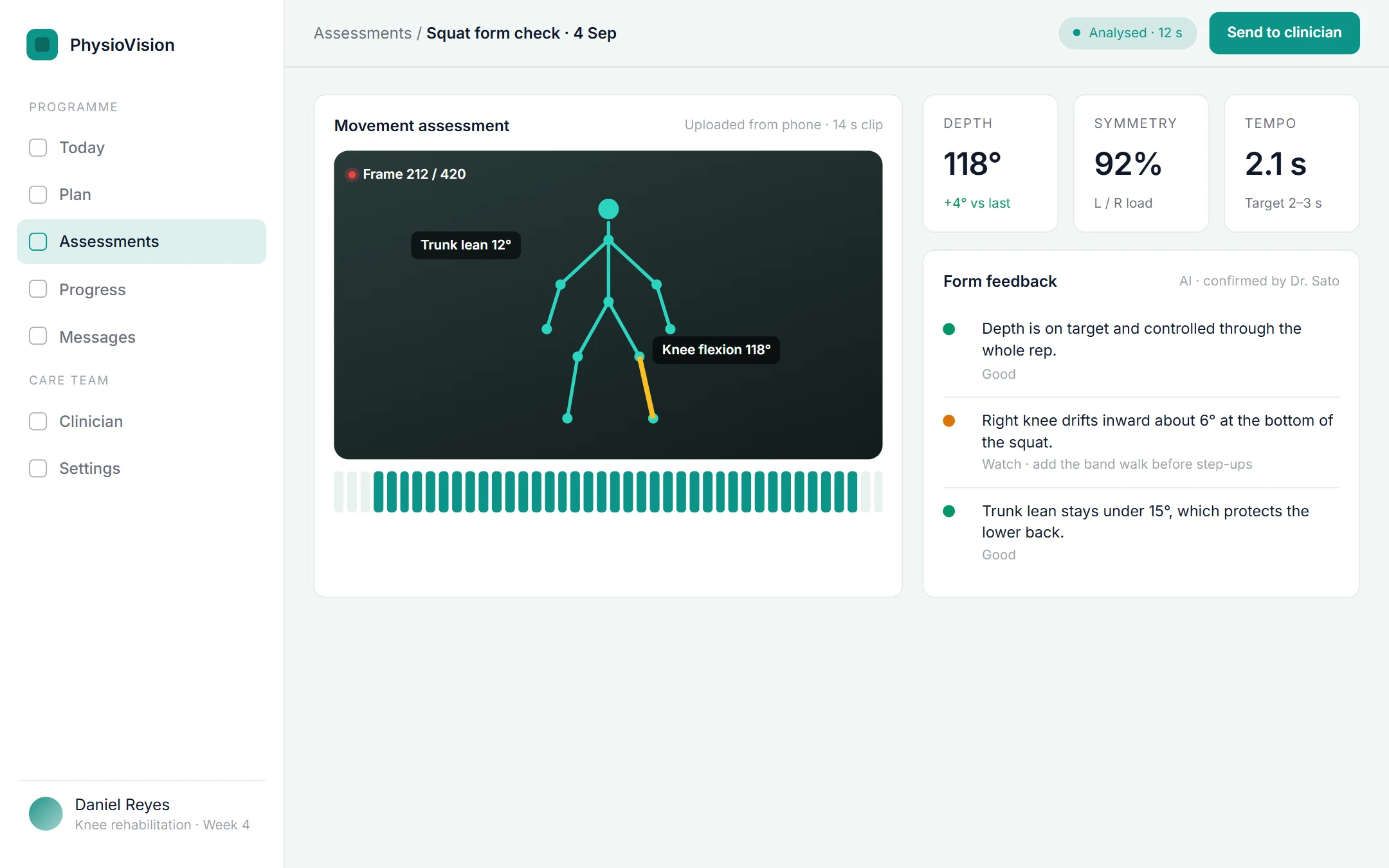
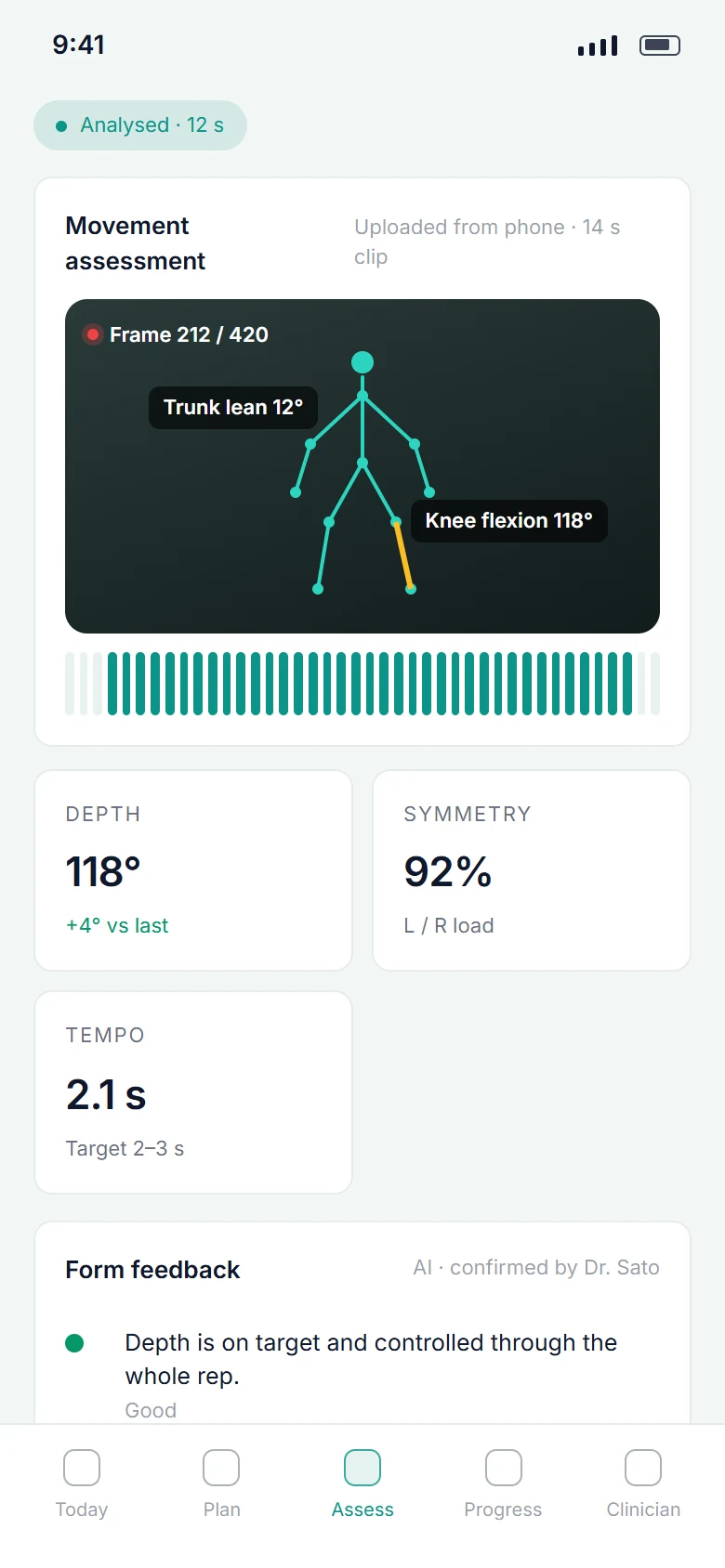
Movement assessment
Pose analysis on an uploaded clip, with joint angles and form feedback.
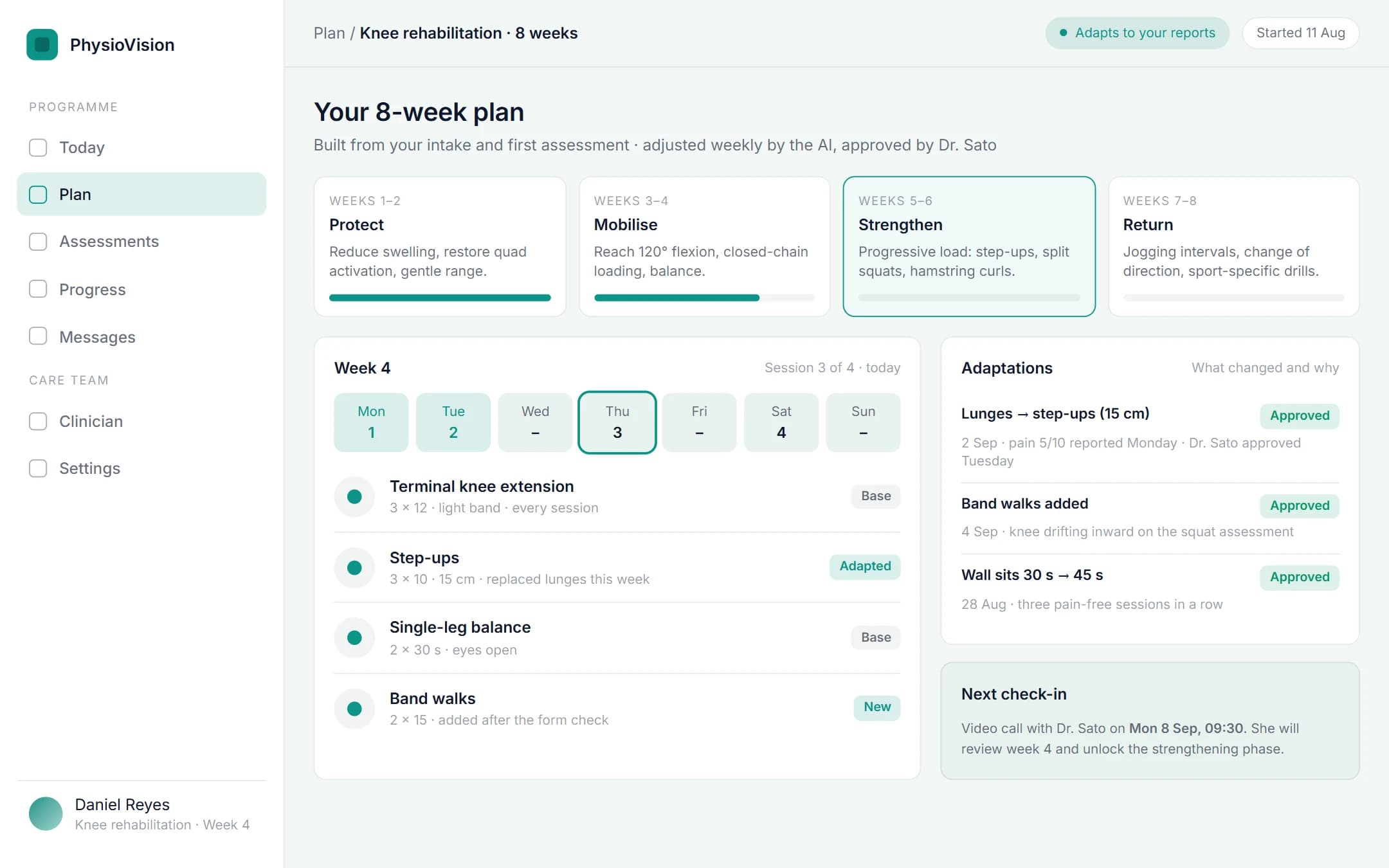
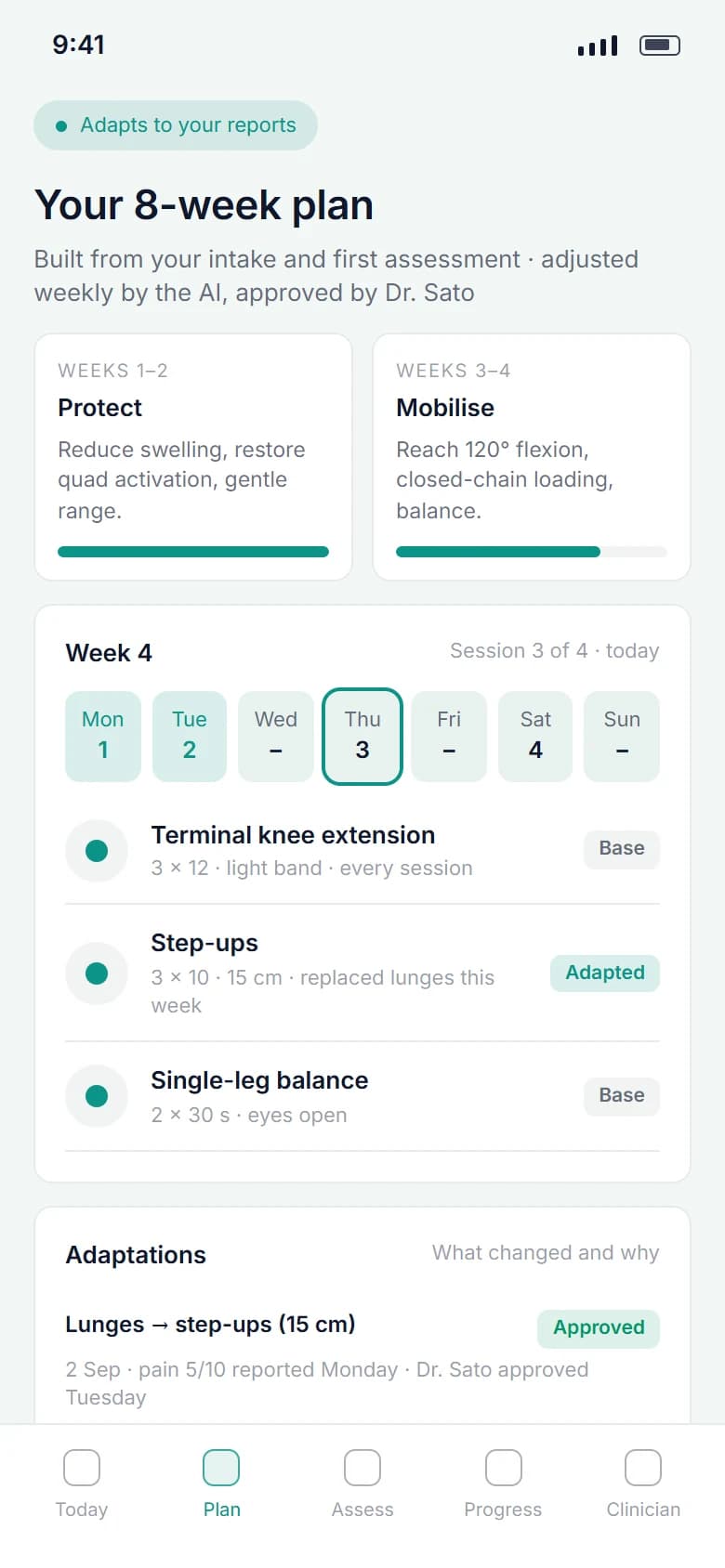
Eight-week plan
Phases, this week’s sessions and every adaptation with its reason.
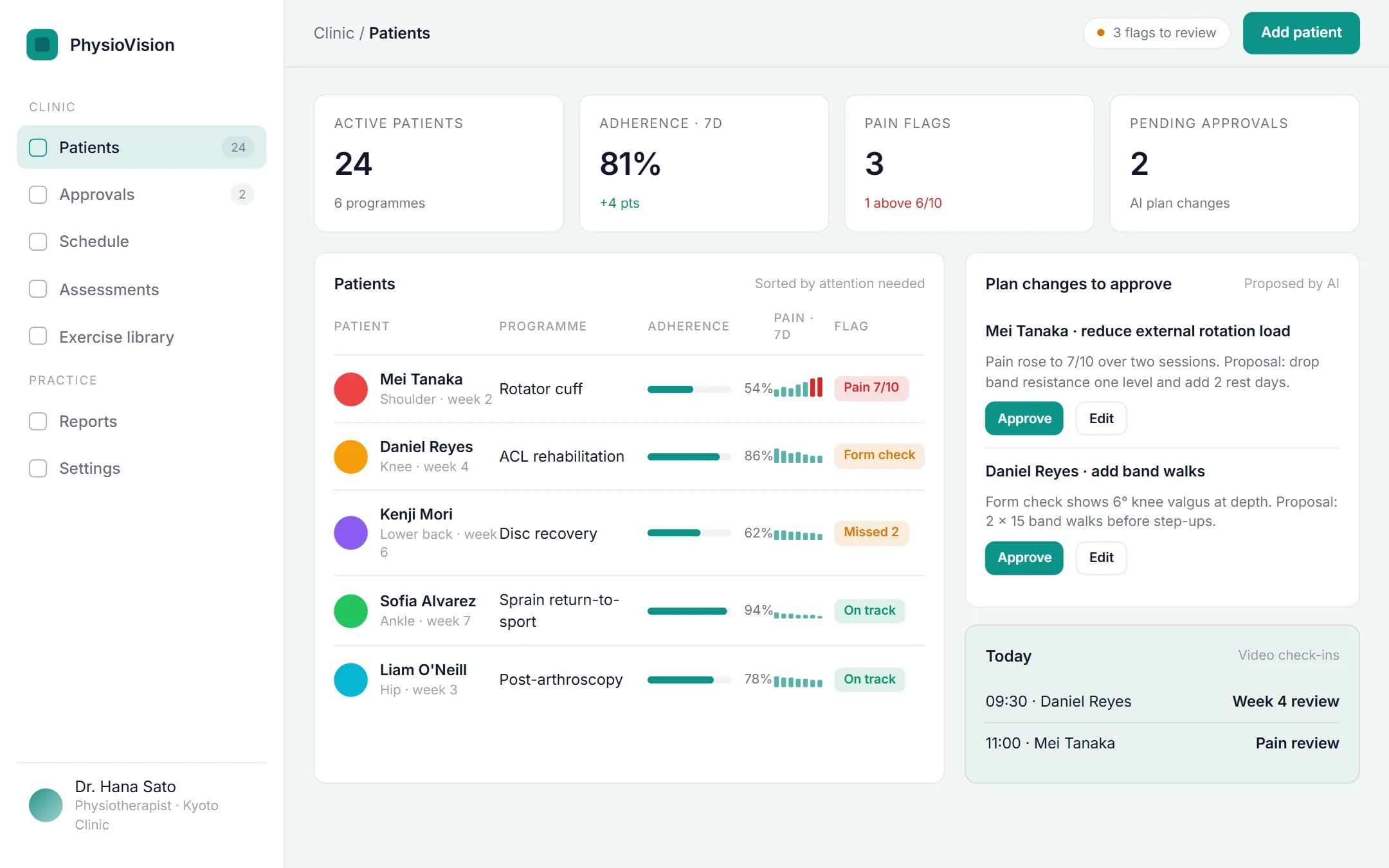
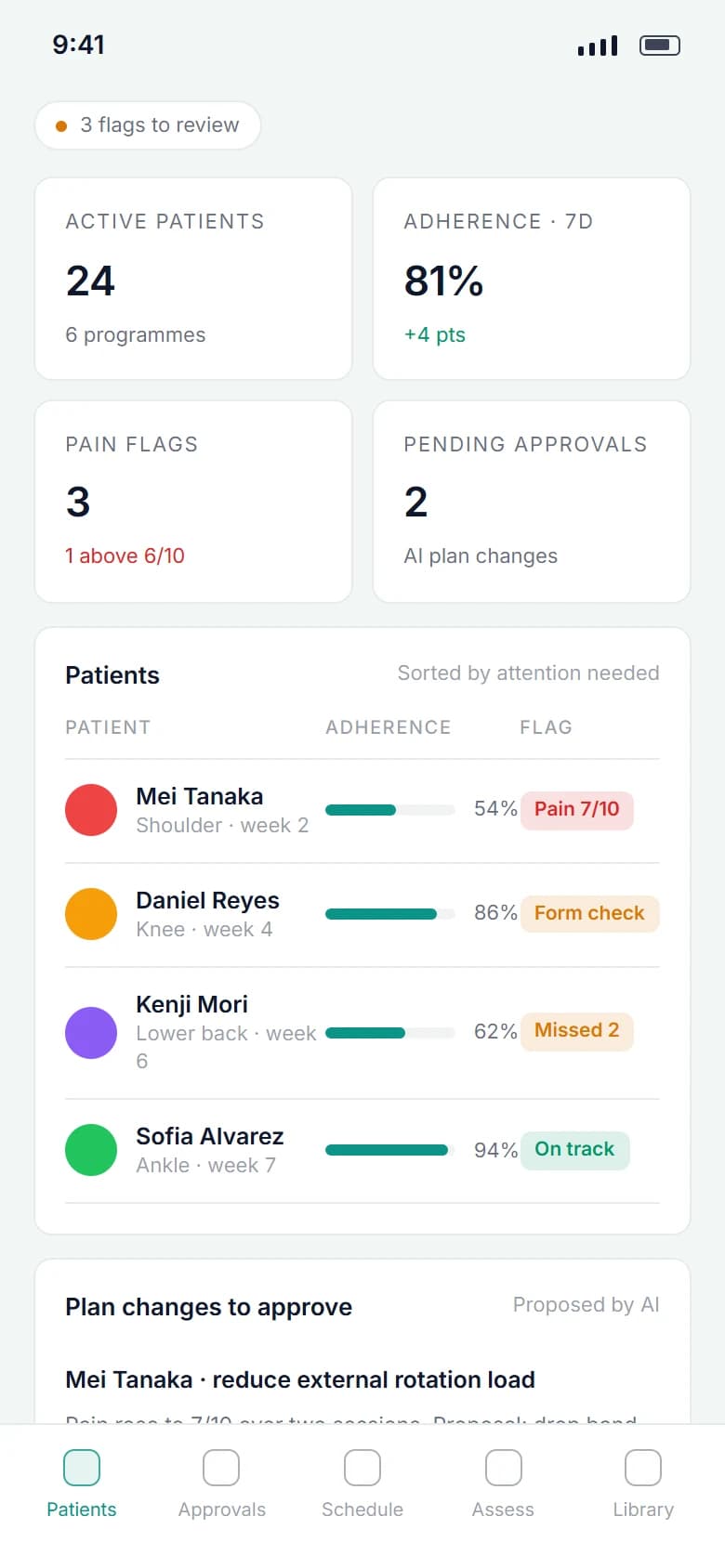
Clinician view
Patients by attention needed and AI plan changes waiting for approval.
On the phone
Home
Movement assessment
Eight-week plan
Clinician view
How it is built
Architecture
A React frontend connects to a Python and FastAPI backend. LangChain coordinates intake, assessment context and plan generation, with OpenAI producing adaptive guidance. Video uploads feed the form-analysis workflow, and uploaded injury articles provide source material for plan generation.
Key features
Challenges & solutions
Where it got hard.
Challenge
Static exercise plans could not respond when a patient’s daily performance improved or declined.
Solution
Connected daily logs to progression and regression rules so the plan adapts automatically instead of waiting for manual review.
Challenge
Plan generation needed injury-specific context rather than relying on generic model knowledge.
Solution
Made uploaded articles on common injuries available to the generation workflow so recommendations can use relevant source material.
Results
What shipping it changed.
Daily plan progression and regression automated from patient performance.
Stack
Frontend
- React
Backend
- Python
- FastAPI
AI
- LangChain
- OpenAI
Let's talk
We can usually tell within one call whether the approach above transfers to your problem, and what would need to change.